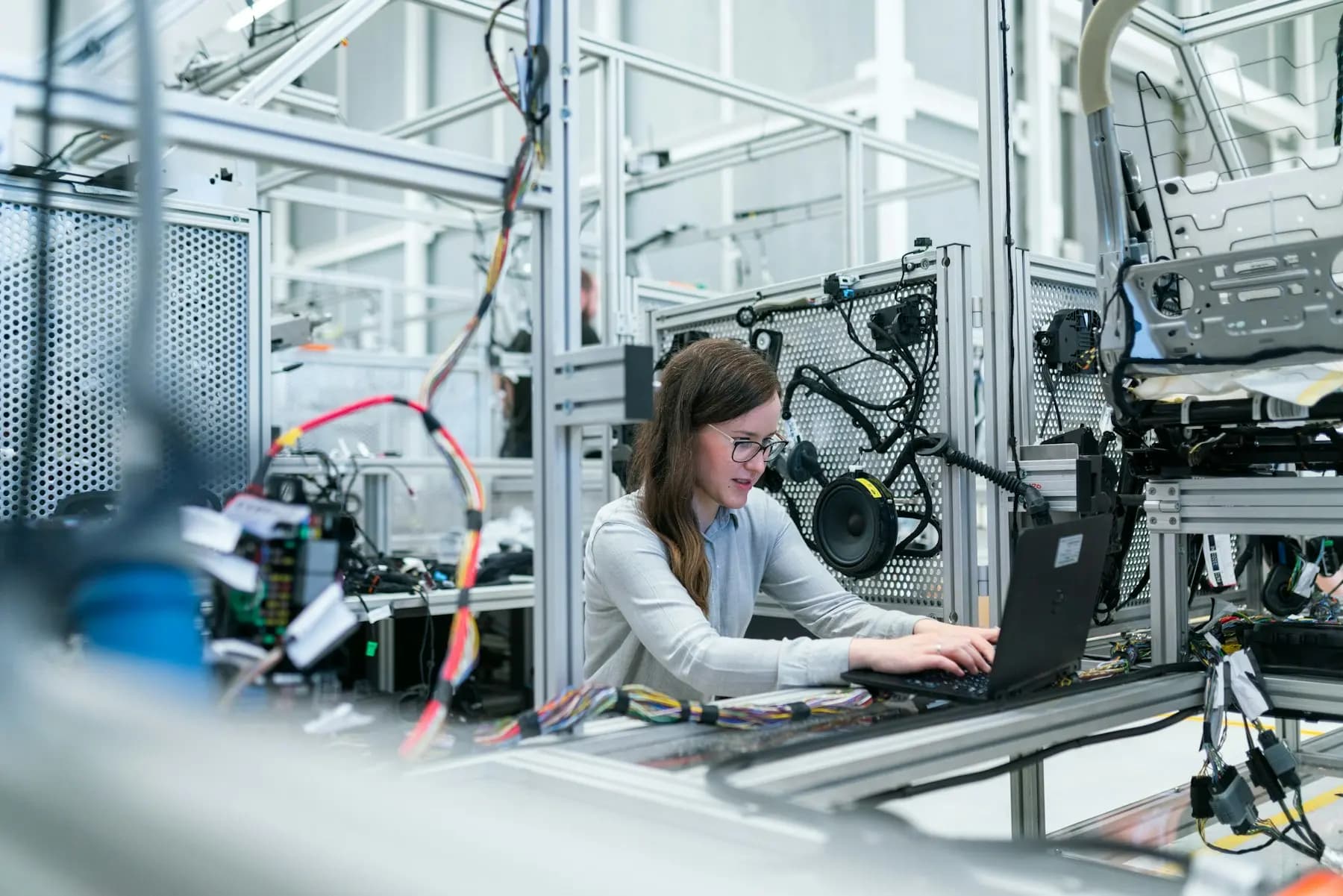
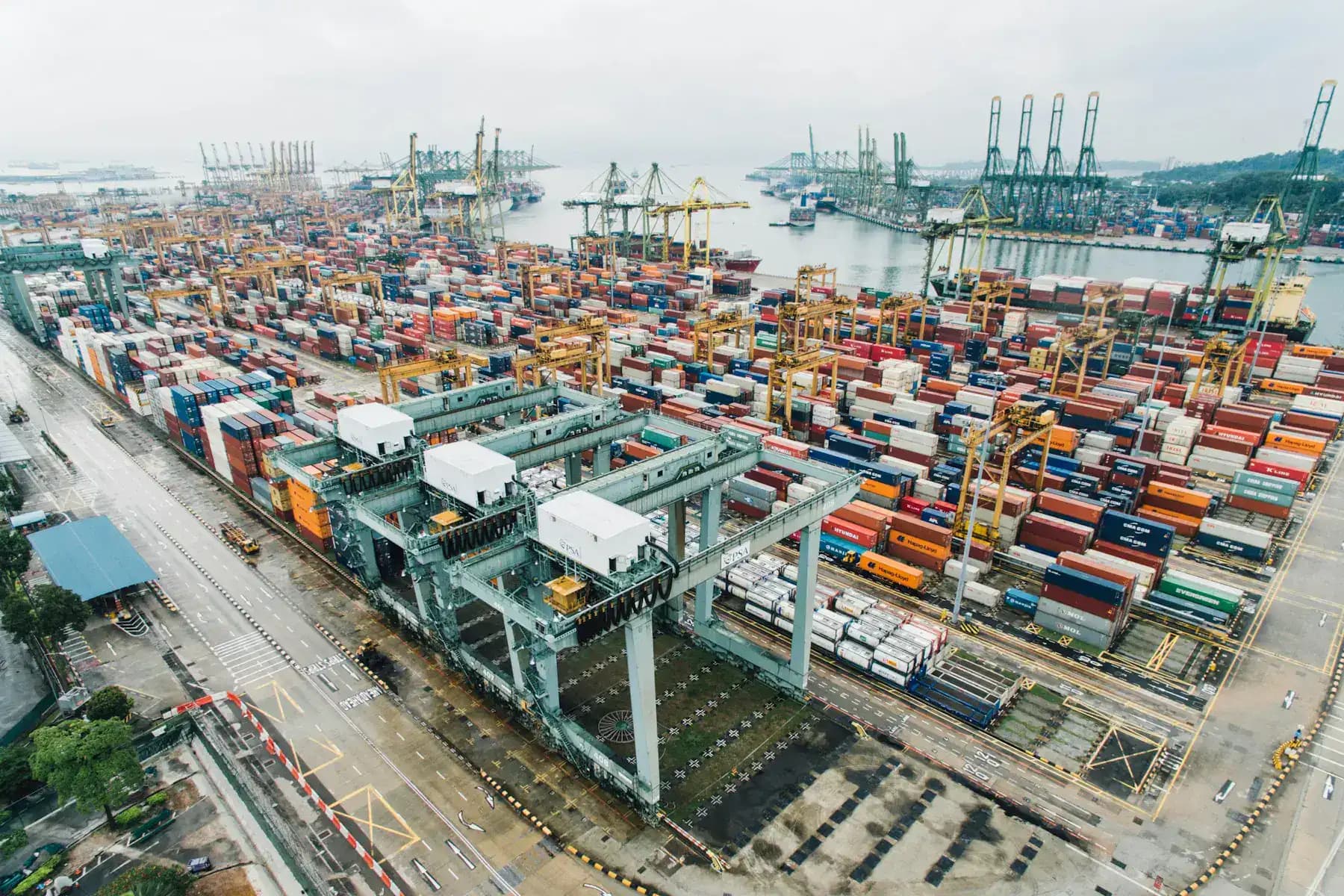
Manufacturing software that brings orders, assets and production records into a usable operating picture - without pretending a dashboard controls the factory.
Orders, material availability and specifications create the constraints for production.
Choose a role to see its responsibility in the system.
The floor, the plan and the record need to agree.
Connect planning, production, quality and maintenance to the work on the floor.
The people, places and operating context shape every product decision.
What needs attention.
The plan does not match the floor
Delayed capture and disconnected work orders can hide bottlenecks or incomplete work.
Legacy equipment has real boundaries
Supported protocols, plant policy and safety responsibilities determine what can be read or changed.
Quality loses its lineage
An inspection needs the right material, lot, specification and attributable release decision.
Telemetry is not diagnosis
Sensor freshness and operating context matter. A signal should not be mistaken for an authorised maintenance or safety conclusion.
A closer look at the business context
An order moves through materials, scheduling, production, inspection and dispatch. The systems reporting those stages may be older, disconnected or close to safety-critical equipment. Start by understanding the operating process and the boundary between useful software and authorised machine control.
Products built around the job.
Choose a product direction to see who it supports and what it should make easier.
Production planning tools
Order, resource and schedule views over agreed capacity and dependency models.
Plan the connections, protect the information and agree how the product will be evaluated.
Connect what matters.
Production history
ERP and MES interfaces
Supported industrial gateways
SCADA / historian read interfaces where permitted
Quality and maintenance systems
Warehouse and supplier data
Identity and asset registries
Interfaces to assess - not a claim of vendor access or certification.
Security and reliability.
IT / OT and safety boundaries
Agree permitted interfaces, segmentation and change approval with plant and OT owners. Do not treat a web application as a replacement for certified machine or safety controls.
Traceability and quality evidence
Model lots, specifications, inspection versions and attributable release decisions around the actual process.
Data quality and freshness
Expose missing samples, inconsistent units and stale telemetry. Evaluate models on relevant operating conditions.
Controlled rollout
Plan read-only validation, operator review, rollback and training before expanding the operating scope.
Relevant projects and solution directions, alongside practical reading for your next product decision.
Esotek Corporation
Esotek Corporation
Published case study
Esotek Corporation is a premium industrial packaging and printing company specializing in luxury boxes, custom packaging, and precision printing solutions. We created a sophisticated digital presence that reflects its commitment to craftsmanship, innovation, and manufacturing excellence.
Explore the project scope and decisions in its published dossier.
SPI · Smart Automation
SPI · Smart Production Management
Published case study
SPI's BHIVES is an intelligent manufacturing operations platform designed to connect people, processes, and production. We helped bring complex manufacturing workflows into a unified digital experience focused on operational visibility, efficiency, and smarter decision-making.
Explore the project scope and decisions in its published dossier.
HireUTE
HireUTE
Published case study
HireUTE is an on-demand delivery and logistics platform designed to simplify how customers book, manage, and track transportation services. Developed for the Australian market, the platform connects customers with delivery providers through an intuitive digital experience, bringing convenience, operational efficiency, and transparency to local and last-mile deliveries.
Explore the project scope and decisions in its published dossier.
The Corporate Hub
The Corporate Hub
Published case study
The Corporate Hub is an exclusive B2B networking and business opportunity platform designed to connect credible organizations, trusted service providers, and strategic partners. We created a sophisticated digital experience that brings professional networking, business intelligence, and meaningful commercial opportunities together within a curated ecosystem built on trust.
Explore the project scope and decisions in its published dossier.
Neuro Kaizen
Neuro Kaizen - Human Performance Platform
Published case study
Neuro Kaizen is a neuroscience-driven performance recovery brand dedicated to helping individuals restore focus, resilience, and peak performance. We created a professional digital experience that communicates its scientific approach while making its specialized services accessible and engaging.
Explore the project scope and decisions in its published dossier.
Esotek Corporation1 of 5
Projects are selected by their published industry associations.
Explore how Savo builds intelligent AI agents and connected automation workflows that reduce repetitive tasks, streamline operations and help businesses scale.
Discover how Savo approaches secure software development, DevSecOps, quality testing, cloud deployment and ongoing protection to build reliable digital products.
Discover how Savo approaches software delivery with rigorous quality assurance, transparent milestones, source code ownership and NDA-backed confidentiality.
Explore related ideas in our published industry reading.
Potentially. Assess supported interfaces, licences, data quality and plant policies first. A read-only integration or operational layer can be a safer initial scope than replacing controls.
No. The illustrated scope connects operational information and reviewed workflows. Equipment and safety control remain subject to plant authority and specialist engineering.
No guarantee is made. Suitable history, operating context and labelled events are needed to evaluate whether a model provides a useful signal compared with a simpler baseline.
Link the result to the correct lot, specification version, operator and review decision. Model non-conformance and holds rather than representing every inspection as passed.
Choose a bounded production, quality or maintenance workflow with accessible data, named owners and measurable acceptance criteria. Validate the IT/OT boundary before implementation.
Manufacturing & Industry 4.0 software questions
What needs to work better in manufacturing & industry 4.0?
Bring the workflow, the systems it touches and the people who rely on it. We can discuss the constraints and a useful first scope - before choosing the technology.